
It seems like not too long ago that web designers were talking about the scroll-down factor for web pages. The short of it being that people are much less likely to scroll to read to the end of the page, so web design began to incorporated much more succinct methods and scrolling became less of an issue. It was about keeping your audience interested and engaged. Good marketing does this everywhere, from the grocery store (who wants to have to compare prices on cans of tuna over three aisles? And, yes, I once encountered a grocery store that did that!) to the organization of books in your local bookstore to our online marketing. The quicker and easier it is to browse for your item and find what you want, the more likely your customer will stay and purchase/use your services. When was the last time that you, as a consumer, walked into a store that was crowded and decided to dig for the one small item you wanted. I know that I turn and walk out immediately. The same is true online.
Although most of us now take what I have come to think of as the scroll factor seriously on regular websites, the opening of the mobility market has us thinking in even smaller chunks, just because the real estate on mobile device screens is tiny. To make mobile online activity more accessible and less crowded some rethinking must be involved. As Doug Caverly explains in his article “Google’s Short Answers Move to Mobile Phones”, Google has “taken an important step, then, by making the short answers it introduced a month ago available to folks who are on the go.” Rather than explaining how this will help mobility users, take a quick look at a visual comparison of search results on a regular search versus the short answers version:
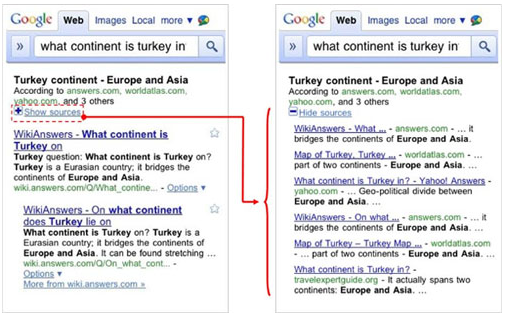
Google’s shorter descriptions for each link provides the mobile user with better selection and a less crowded experience, which makes it a much more enjoyable experience. Sometimes to get the attention of our users or customers, we have to think like they do and anticipate their needs and desires. Google seems to be pretty good at doing just that. When building your own mobile website and implementing your online marketing strategy, thinking outside of the old paradigms may be the key to increasing your own market share.